Mexico's Holidays & Celebrations
From Día de Muertos and Mexican Independence Day to Carnaval and Playa's own Feria del Carmen, discover what Mexico celebrates, when it happens, and what to expect when you live here.
 Reviewed for Accuracy
 Last Verified: October 12, 2026
 No Login. Just Answers.
 Quick Answer
Mexico celebrates a wonderful mix of national holidays, religious traditions, cultural festivals and local celebrations. Some are official days off work, while others bring music, parades, fireworks, family gatherings and festivities without necessarily closing businesses.
If you live in Playa del Carmen, some of the most important celebrations to know are:
Día de Muertos (October 31–November 2): A beautiful tradition of remembering loved ones who have passed away.
Mexican Independence Day (September 15–16): Two days of patriotic celebrations, with the biggest festivities often happening on September 15.
Carnaval (February or March; dates vary annually): Colorful parades, costumes, music and public celebrations.
Semana Santa (March or April; dates vary annually): An important religious period and one of Mexico's busiest vacation seasons.
Feria del Carmen (around July 16): Playa del Carmen's own celebration honoring its patron saint.
Christmas and Las Posadas (December): Family gatherings, traditional celebrations, food and religious observances.
Good to Know: Not every Mexican holiday is an official day off. Some of the country's biggest celebrations take place on normal working days.
Día de Muertos: Celebrating the Lives of Loved Ones
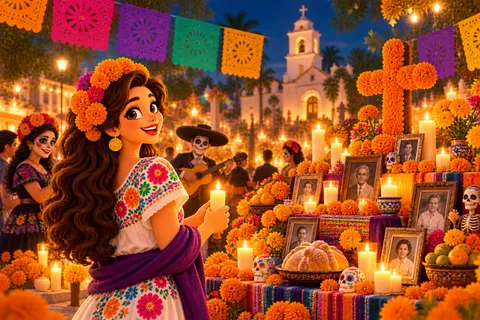 When: October 31–November 2. Official federal day off? No. Especially important in Playa? Yes, including the regional Maya tradition of Hanal Pixán.
Día de Muertos, or Day of the Dead, is one of Mexico's most meaningful and recognizable traditions. Although its name might sound somber, the celebration is filled with color, flowers, music, food and memories.
Rather than focusing only on the sadness of losing someone, families honor the lives of relatives and friends who have passed away. According to tradition, the souls of departed loved ones return to visit their families during this special time. Families welcome them with offerings, favorite foods, photographs and personal mementos.
Día de Muertos has roots in Indigenous Mexican traditions and Catholic observances. Customs vary from one region and family to another.
In 2008, UNESCO inscribed the Indigenous festivity dedicated to the dead on its Representative List of the Intangible Cultural Heritage of Humanity, following its earlier proclamation in 2003.
When is Día de Muertos celebrated? The principal observances take place around November 1 and 2, although preparations and some regional traditions begin earlier.
For the special days of remembrance, how to make your own ofrenda and more, read Ask Playa's full guide: What Is Día de Muertos?
Traditions vary
These associations are common but not universal. Different communities have their own traditions and schedules.
What Is an Ofrenda?
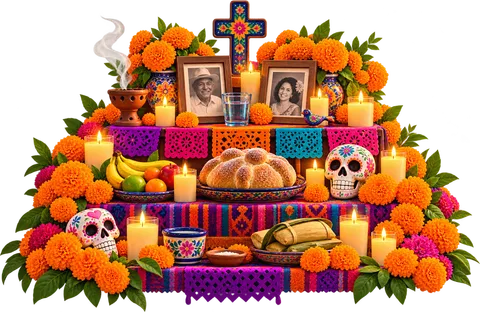 An ofrenda is an altar or offering created to honor someone who has died.
Some families create small ofrendas in their homes. Others build elaborate displays with multiple levels, decorations and personal objects. You may also see public ofrendas in plazas, schools, cultural centers, hotels and businesses.
Common elements include:
- Photographs
Pictures of loved ones being remembered.
- Cempasúchil (marigolds)
Bright orange and yellow flowers traditionally associated with guiding spirits.
- Candles
Light symbolizing remembrance and guidance.
- Water
Traditionally offered to refresh visiting souls.
- Favorite foods and drinks
Items the deceased enjoyed during their lives.
- Pan de muerto
A special sweet bread associated with the season.
- Papel picado
Colorful decorative paper cut into intricate designs.
- Copal incense
Used in some traditions for purification and spiritual symbolism.
- Personal belongings
Meaningful objects connected to the person being honored.
An ofrenda is not simply a decoration. For many families, it is a deeply personal expression of love and remembrance.
Hanal Pixán: The Maya Tradition of the Yucatán Peninsula
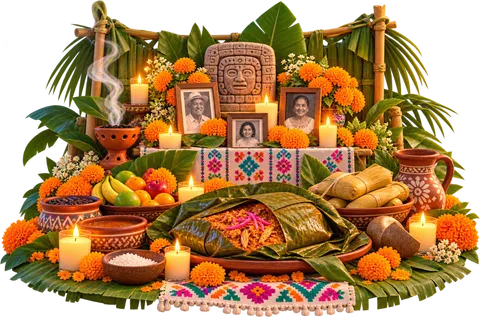 Living in Playa del Carmen gives you an opportunity to experience a regional tradition that many visitors to other parts of Mexico never encounter.
Hanal Pixán, also written Janal Pixán, is a Maya tradition whose name is commonly translated as "food of the souls." It is observed in parts of the Yucatán Peninsula, including communities in Quintana Roo.
Like Día de Muertos, Hanal Pixán honors deceased family members through remembrance, food, prayers and offerings. But it has its own cultural roots, customs and traditional dishes.
One of the best-known foods is pib, also called mucbipollo. This is a large, savory tamal traditionally prepared with corn dough, meat and seasonings, wrapped in banana leaves and cooked in an underground oven.
Families may also prepare special altars with candles, food, water, photographs and traditional Maya elements.
Hanal Pixán is not simply a different name for a tourist festival. It remains a meaningful family and community tradition.
Ask Playa Tip
If you attend a Hanal Pixán cultural event, take time to learn about the Maya traditions behind the celebration. They are an important part of the region's identity.
What Are Catrinas?
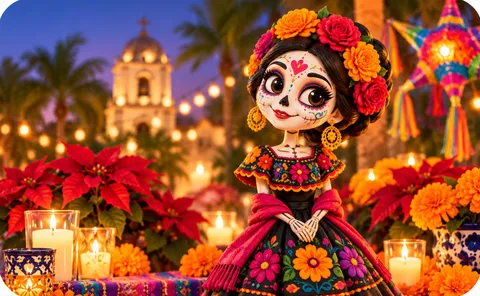 You'll see them everywhere during Día de Muertos: elegantly dressed skeleton figures, often wearing elaborate hats, dresses and beautiful skull makeup. These are called Catrinas.
The iconic La Catrina figure grew out of Mexican satirical art, particularly the work of José Guadalupe Posada, and was later popularized by Diego Rivera.
Today, Catrinas are among the most recognizable visual symbols associated with Día de Muertos. At public festivals, you may see people wearing elaborate Catrina costumes or having their faces painted like decorative skulls.
Do you have to dress up? Not at all. Regular clothing is perfectly acceptable at public Día de Muertos events.
If you enjoy costumes or face painting, you're welcome to participate appropriately in festive public activities. But dressing up is optional, not expected.
Is Día de Muertos the Same as Halloween?
No. They're different celebrations, even though they happen around the same time.
Halloween is generally associated with costumes, spooky decorations, trick-or-treating and parties. Día de Muertos centers on remembering deceased loved ones through family traditions, offerings and cultural observances.
In Playa del Carmen, you'll see both. Restaurants, bars and nightlife venues may host Halloween parties on October 31, while public spaces and cultural organizations hold Día de Muertos activities.
It's entirely possible to attend a Halloween costume party one evening and visit a traditional ofrenda exhibition the following day. Just remember that the cultural meaning behind each celebration is different.
Where Can You Celebrate Día de Muertos in Playa del Carmen?
- Public celebrations in Playa
- Playa del Carmen has organized Día de Muertos and Janal Pixán activities in previous years, including altar exhibitions, cultural performances, processions and public celebrations. Some events have taken place around Quinta Avenida and central civic spaces. Exact locations and programs change annually, so check the current municipal schedule rather than assuming last year's events will repeat.
- Xcaret's Festival de Vida y Muerte
- Xcaret hosts one of the region's best-known Día de Muertos cultural festivals, typically held around Día de Muertos; check the current festival schedule. The festival features traditional food, music, dance, theater, altars and cultural presentations. Unlike many municipal celebrations, Xcaret's festival is a ticketed attraction. Resident admission options may be available, subject to current eligibility rules.
- Community and cultural events
- Schools, cultural organizations, businesses and neighborhoods may also organize altars, workshops, performances and seasonal activities. Ask Playa's What's Happening section is the place to check for confirmed local events, dates and locations.
How to Participate Respectfully
You don't need to be Mexican or have family participating in the tradition to appreciate Día de Muertos. Public events and cultural activities are opportunities to learn and participate.
A few simple guidelines make a difference:
- Attend public altar exhibitions and cultural performances.
- Learn the meaning behind the decorations and offerings.
- Ask before photographing personal altars or people participating in private observances.
- Be especially respectful in cemeteries and during family memorials.
- Don't move or touch items placed on an ofrenda.
- Remember that not every Día de Muertos gathering is intended as entertainment.
The Simple Rule
Enjoy the public celebrations, appreciate the traditions, and treat personal remembrance with respect.
Mexican Independence Day: September 15 and 16
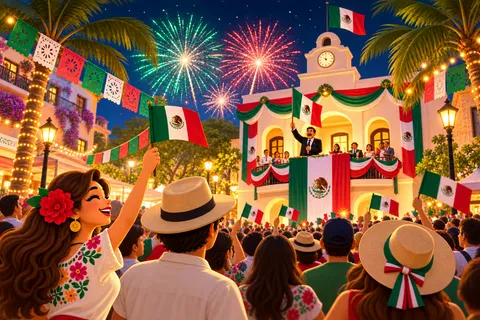 When: September 15–16. Official federal day off? September 16.
One of the biggest surprises for newcomers is that Mexico celebrates Independence Day over two days. And the biggest party often happens the night before the official holiday.
- September 15: El Grito de Independencia
The big celebration night
On the evening of September 15, people gather in public squares across Mexico for music, food, fireworks and patriotic celebrations.
The highlight is El Grito de Independencia, a ceremony commemorating the call to independence associated with Miguel Hidalgo in September 1810. Government officials lead the traditional Grito, often near 11 p.m., with patriotic cheers and calls of ¡Viva México! The celebration may continue with fireworks, concerts and festivities.
In Playa del Carmen, municipal celebrations have traditionally included public performances and activities around the city's civic center. The exact program and location should be checked each year on What's Happening.
- September 16: Independence Day
The official national holiday
September 16 is Mexico's official Independence Day and a mandatory rest day under federal labor law.
Civic ceremonies, parades and other activities may take place. Some government offices, banks and other institutions will be closed.
Ask Playa Tip
If you want to experience the main public Independence Day party, don't wait until September 16. Look for the evening festivities on September 15.
Isn't Cinco de Mayo Mexico's Independence Day?
No — that's a common misconception.
Cinco de Mayo, May 5, commemorates Mexico's victory over French forces at the Battle of Puebla in 1862. Mexico's Independence Day is September 16, commemorating the beginning of the independence movement in 1810.
Cinco de Mayo is generally a much smaller celebration in Playa than Independence Day.
Mexico's Holiday Calendar
Here's a practical overview of the holidays and celebrations you're likely to encounter while living in Playa del Carmen.
Good to Know
Mexico also recognizes October 1 every six years when the federal executive branch changes hands, as well as applicable election-related rest days.
The table describes mandatory rest days under federal labor law (Article 74). School calendars, bank holidays and government-office schedules may differ.
Playa del Carmen's Own Celebrations
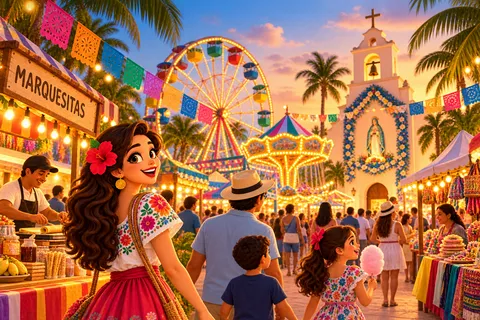 Mexico's national holidays are only part of the picture. Playa del Carmen also has local and regional traditions that reflect its coastal setting, Catholic heritage, Maya culture and modern community life.
Feria del Carmen: Playa's patron-saint celebration. Celebrated around July 16; festival dates vary. Feria del Carmen is one of Playa del Carmen's most distinctive local celebrations.
It honors Nuestra Señora del Carmen, or Our Lady of Mount Carmel, the city's patron saint. The feast day is July 16, although fair activities may extend across several days.
Depending on the year's program, celebrations can include:
- Free public concerts
- Amusement rides and carnival games
- Traditional food vendors
- Cultural performances
- Religious ceremonies
- Family activities
- Traditional music and dancing
Good to Know
This celebration is a wonderful reminder that Playa del Carmen is more than a beach destination. It has its own community traditions and local identity.
Feria del Carmen is a local celebration, not an additional federal mandatory rest day. Check What's Happening for this year's dates and program.
Carnaval Playa del Carmen
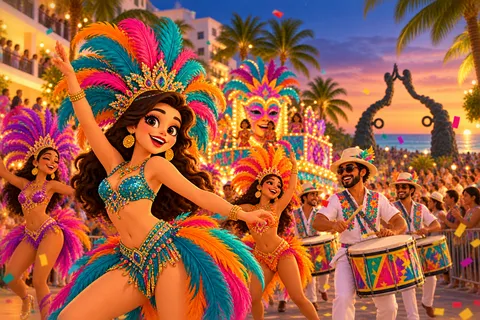 When: February or March; dates vary annually.
Carnaval is one of Mexico's most colorful celebrations. Traditionally held before Lent, Carnaval features costumes, dancing, music, performances and festive public gatherings.
Playa del Carmen organizes its own Carnaval celebrations, which may include parades, concerts, costume competitions and family activities. Exact dates and programs change each year, so check What's Happening for this year's schedule.
For residents, Carnaval is a fun opportunity to experience a different side of Playa's community life — and many public activities are free.
More Local Celebrations
- Hanal Pixán and local Día de Muertos celebrations
- When: Late October and early November. Because Playa is part of the Yucatán Peninsula, local Día de Muertos celebrations may highlight Maya traditions alongside other Mexican customs. Municipal events have previously included Janal Pixán celebrations, public altars, processions, music and cultural activities. These are particularly valuable experiences for newcomers who want to understand the region beyond its beaches and resorts.
- Other community and regional celebrations
- Throughout the year, Playa may also host civic anniversaries, religious processions, Maya cultural events, community fairs and seasonal festivals. Some are organized by the municipality, while others are held by churches, cultural organizations or individual neighborhoods. Not all of these are official holidays, and not all recur on the same dates or in the same locations.
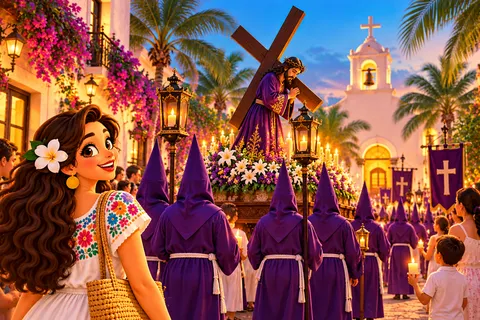
Semana Santa: One of Playa's Busiest Times of Year
 When: March or April; dates vary annually.
Semana Santa means Holy Week, the week leading up to Easter Sunday. For many Mexican families, it is an important period of religious observance.
It's also one of the country's major vacation seasons. That second part matters enormously if you live in Playa.
During Semana Santa, you may notice:
- More domestic tourists visiting the Riviera Maya
- Crowded beaches and beach clubs
- Increased traffic and parking difficulties
- Busier restaurants and attractions
- Higher demand for hotels and transportation
- Changes to school and business schedules
Ask Playa Tip
Good Friday is widely observed, but neither Good Friday nor Easter Sunday is a federal mandatory rest day under Mexico's Federal Labor Law.
If you live in Playa, plan grocery runs, beach visits and longer drives with the holiday crowds in mind. Popular areas can be substantially busier than usual.
Christmas, Las Posadas and Three Kings' Day
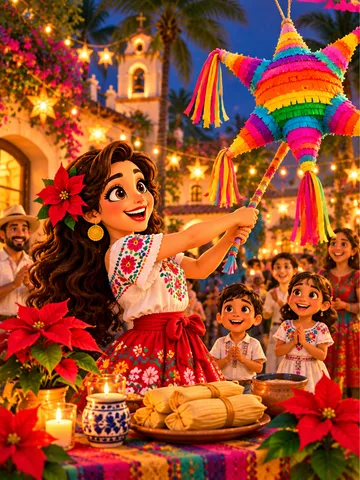 Mexico's Christmas season includes several traditions that may be unfamiliar to newcomers.
Virgen de Guadalupe — December 12. December 12 honors Our Lady of Guadalupe, an important figure in Mexican Catholicism. Celebrations may include religious services, pilgrimages, music and community gatherings. It's an important religious observance, but not a federal mandatory rest day.
Las Posadas — December 16–24. Las Posadas are traditional gatherings recalling Mary and Joseph's search for lodging before the birth of Jesus. Celebrations may include songs, processions, piñatas, food and family gatherings. Customs vary by family and community.
Nochebuena — December 24. Christmas Eve is especially important for many Mexican families. It's common to celebrate with a large family meal and gatherings late into the evening. December 24 is not a federal mandatory rest day, but individual businesses may close early.
Navidad — December 25. Christmas Day is an official federal rest day. Many families spend the day together, and some businesses operate on reduced schedules.
Día de Reyes — January 6
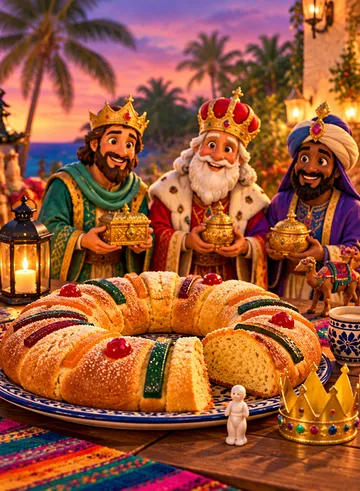 Three Kings' Day, or Día de Reyes, is another important family celebration.
A popular tradition is sharing Rosca de Reyes, a ring-shaped sweet bread containing small figurines.
Whoever finds a figurine traditionally has a role in providing tamales for a gathering on February 2, Día de la Candelaria.
What Happens to Businesses and Services on Mexican Holidays?
One of the most practical things to understand about Mexican holidays is that celebrations and official closures don't always match.
A huge public festival might take place on a normal working day, while a quieter national observance might close government offices and banks.
- Government offices
- Many government offices close on official holidays. Some also observe additional administrative holidays. If you have an appointment involving immigration, municipal services, taxes or other government business, check the office's schedule in advance.
- Banks
- Banks follow their own official holiday calendar, which includes some dates that aren't federal mandatory rest days. In recent years that calendar has also closed bank branches on Holy Thursday, Good Friday, November 2 and December 12. ATMs and mobile banking may remain available even when branches are closed. Some transfers or transactions may not process until the next business day.
- Supermarkets and pharmacies
- Major supermarkets and pharmacies often remain open during holidays, but hours can vary. Smaller independent businesses may close or adjust their schedules.
- Restaurants, bars and beach clubs
- Many restaurants and tourism businesses remain open — and may be especially busy during major holidays. Some offer special menus, events or celebrations.
- Schools
- School breaks follow the official education calendar, which is not identical to the federal labor holiday schedule. Semana Santa, winter holidays and other school breaks can have a noticeable effect on traffic and crowds.
- Transportation and roads
- Major public celebrations may involve road closures, parades, pedestrian-only areas or increased traffic. Check current local announcements before driving into Centro during large events.
Working on a federal holiday
Under Mexico's Federal Labor Law, employees who work on a mandatory rest day are generally entitled to their normal daily wage plus double pay for the work performed — commonly described as triple pay in total.
Employment arrangements and legal exceptions can affect individual situations.
Ask Playa Tips for Enjoying Mexican Holidays
- Check the date and the celebration. Some holidays are observed on a Monday even when the historical anniversary falls on another day.
- Don't assume everything closes. Playa is a tourism-oriented city, and many businesses remain open during major holidays.
- Plan around crowds. Independence Day, Semana Santa, Christmas and major festivals can affect traffic, parking and popular attractions.
- Look for free municipal events. Some of Playa's most enjoyable celebrations are organized by the city and open to the public.
- Learn the local traditions. Hanal Pixán and Feria del Carmen offer opportunities to connect with the history and culture of the region.
- Respect religious and family observances. A public celebration and a private ceremony are not necessarily the same experience.
- **Check What's Happening.** Annual traditions may be predictable, but concert schedules, parade routes, prices and locations can change.
Useful Spanish: Holidays & Celebrations
A few simple phrases can help you navigate local celebrations and holiday schedules. Tap the speaker next to a phrase to hear it.
- ¿Hoy es día festivo?oy ehs DEE-ah fehs-TEE-bohIs today a holiday?
- ¿Mañana van a estar abiertos?mah-NYAH-nah bahn ah eh-STAHR ah-BYEHR-tohsWill you be open tomorrow?
- ¿A qué hora empieza el desfile?ah keh OH-rah ehm-PYEH-sah ehl dehs-FEE-lehWhat time does the parade start?
- ¿Dónde están las ofrendas?DOHN-deh eh-STAHN lahs oh-FREHN-dahsWhere are the altars (ofrendas)?
- ¿Puedo tomar una foto?PWEH-doh toh-MAHR OO-nah FOH-tohMay I take a photo?
- ¿La entrada es gratis?lah ehn-TRAH-dah ehs GRAH-teesIs admission free?
- ¿Hay descuento para residentes?eye dehs-KWEHN-toh PAH-rah reh-see-DEHN-tehsIs there a resident discount?
- ¡Viva México!BEE-bah MEH-hee-kohLong live Mexico!
- ¡Feliz Día de Muertos!feh-LEES DEE-ah deh MWEHR-tohsHappy Day of the Dead!
Find it. Hear it. Show it. Explore more real-life phrases in Ask Playa's Useful Spanish feature, including Mexican Spanish pronunciation and full-screen phrase display.
 Frequently Asked Questions
Is Día de Muertos an official holiday in Mexico?
Día de Muertos is a major cultural observance, but November 1 and 2 are not federal mandatory rest days under Mexico's Federal Labor Law. Some schools, workplaces and public institutions may observe different schedules.
Can foreigners participate in Día de Muertos celebrations?
Yes. Public altar exhibitions, cultural festivals and performances are opportunities for residents and visitors to learn about the traditions. Be respectful of private family observances and cemetery visits.
Do people celebrate Halloween in Playa del Carmen?
Yes. Halloween parties, costumes and decorations are common, particularly in bars, restaurants and nightlife venues. Halloween and Día de Muertos are separate celebrations, although their dates overlap.
Do I have to dress up for Día de Muertos?
No. Catrina costumes and skull makeup are optional. Regular clothing is perfectly appropriate at public cultural events.
Is Mexican Independence Day September 15 or 16?
Both dates are important. September 15 is the traditional celebration night featuring El Grito, while September 16 is the official national holiday.
Are restaurants and stores open on Mexican holidays?
Many are, particularly in tourism-oriented areas such as Playa del Carmen. However, opening hours vary, so check directly with individual businesses.
Does Playa del Carmen have its own holiday?
Playa celebrates Feria del Carmen around July 16 in honor of its patron saint, Nuestra Señora del Carmen. The celebration includes local festivities but is not an additional federal mandatory rest day.
Where can I find upcoming holiday celebrations in Playa?
Check Ask Playa's What's Happening section for current event listings and the Playa del Carmen municipal website for official public announcements.
 Sources
- Mexico's Federal Labor Law (Cámara de Diputados): Article 74, mandatory rest days; Article 75, compensation for work on mandatory rest days
- UNESCO: Indigenous Festivity Dedicated to the Dead (cultural background and heritage recognition)
- INPI, Instituto Nacional de los Pueblos Indígenas (Indigenous cultural traditions and regional heritage)
- Playa del Carmen Municipal Government (local festival programs, civic celebrations and official announcements)
- Xcaret Festival de Vida y Muerte (official festival programming and tickets)
- SEP, Secretaría de Educación Pública (school calendars and holiday periods)
- CNBV, Comisión Nacional Bancaria y de Valores (official banking holiday calendars)
- Diario Oficial de la Federación: CNBV calendar of bank closing days (published December 10, 2025)
Was This Helpful?