What Is Día de Muertos?
Discover the meaning behind Day of the Dead, the special days of remembrance, how to create an ofrenda, and the beautiful traditions celebrated in Playa del Carmen.
 Reviewed for Accuracy
 Last Verified: October 23, 2026
 No Login. Just Answers.
 Quick Answer
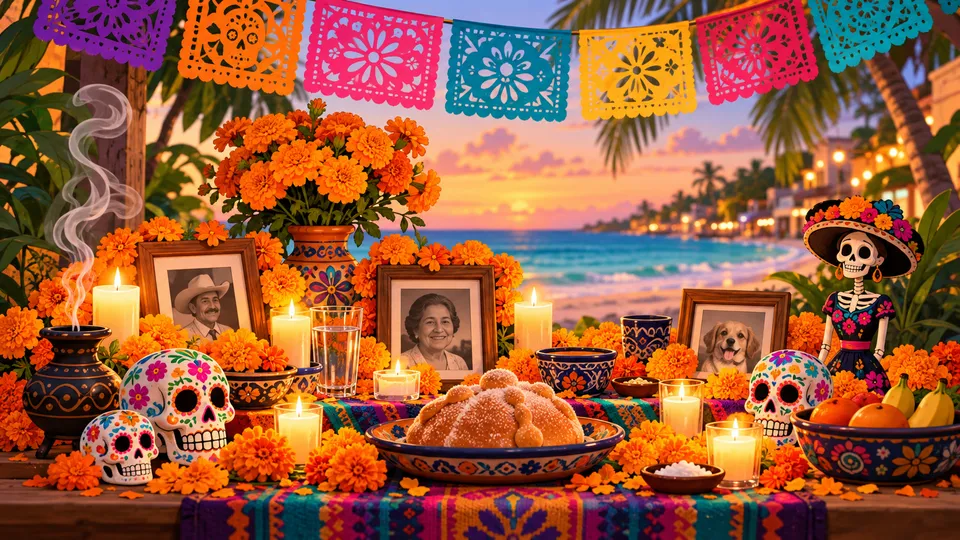
Día de Muertos, or Day of the Dead, is one of Mexico's most meaningful traditions. Each year, primarily around November 1 and 2, families honor loved ones who have died with photographs, flowers, candles, favorite foods, music and beautiful displays called ofrendas.
At the heart of the celebration is the belief that the spirits of loved ones can return for a brief visit. Rather than focusing only on sadness, Día de Muertos celebrates their lives and keeps their memories close.
And here's something many newcomers don't realize: in some traditions, different days are dedicated to remembering children, adults, beloved pets and people who might otherwise be forgotten.
It's a celebration of love, family and the idea that those we've lost remain part of our lives.
Is Día de Muertos the Mexican Version of Halloween?
Not at all! Although the celebrations happen around the same time of year and both may feature skeletons, their meanings are quite different.
Halloween is associated with costumes, spooky decorations, trick-or-treating and entertainment. Día de Muertos is primarily about remembering and welcoming loved ones who have passed away.
Its traditions reflect centuries of Indigenous Mexican beliefs blended with Catholic observances, particularly All Saints' Day and All Souls' Day.
Families may gather at cemeteries, clean and decorate graves, prepare favorite meals, share memories and build colorful altars at home.
You might see skulls, skeletons, flowers, music and joyful celebrations. They aren't meant to be frightening. They reflect a cultural relationship with death that makes room for humor, affection, remembrance and celebration.
In fact, UNESCO inscribed Mexico's Indigenous festivity dedicated to the dead on its Representative List of the Intangible Cultural Heritage of Humanity in 2008.
The Special Days of Día de Muertos: Who Is Remembered and When?
Most people know November 1 and 2 as the principal days of Día de Muertos. But some Mexican traditions recognize a longer period, beginning October 27 and extending through November 3.
The calendar below is one commonly shared version. It isn't a universal schedule followed by every Mexican family or community, and some of these days are regional, family-specific or more recent customs.
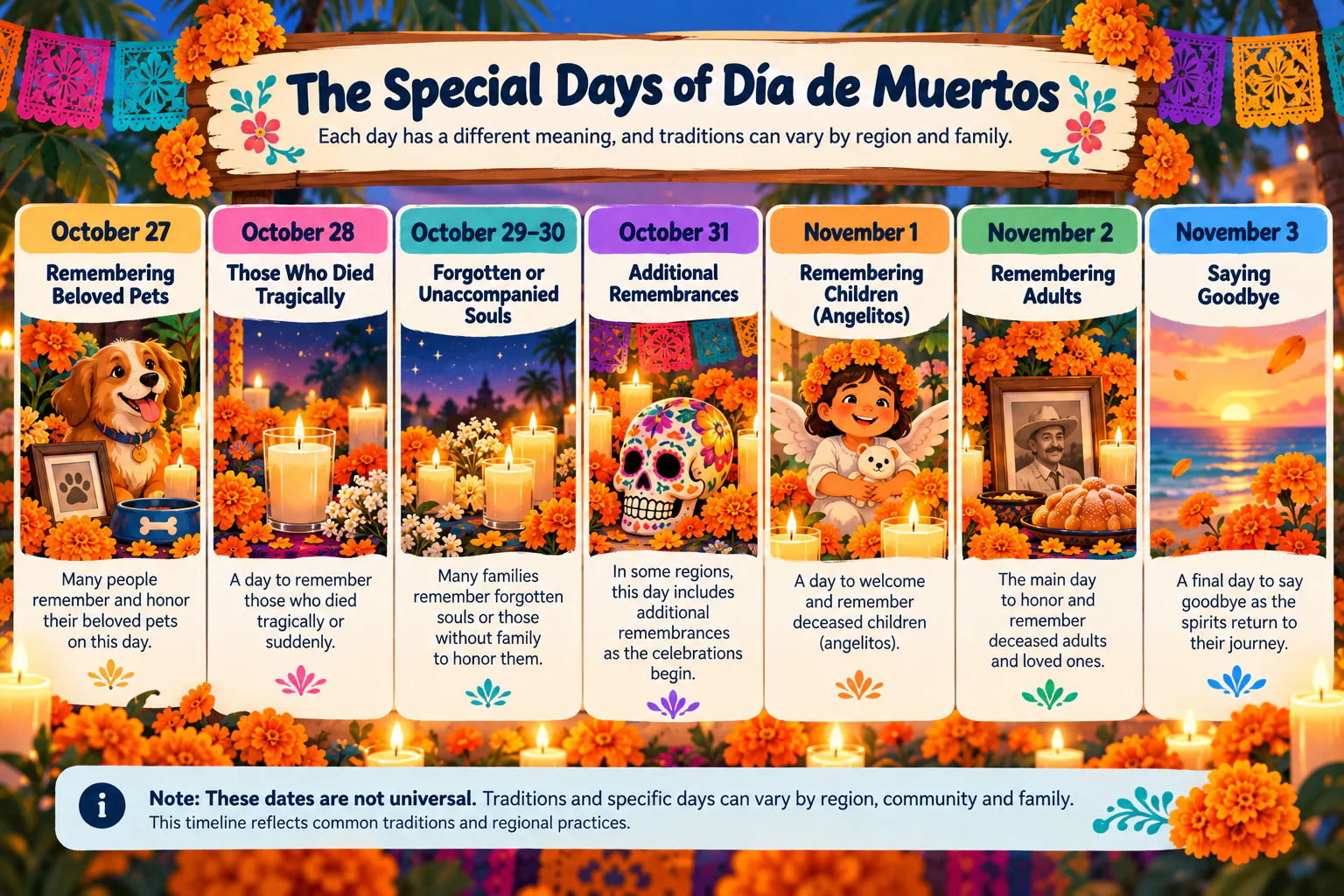
- October 27: Remembering beloved pets
- For many people, the first remembrance is for animals who have passed away. Families who observe this day may prepare a little ofrenda with a pet's photograph, favorite toy, water, treats or food. It has become a widely shared pet-remembrance date, especially in contemporary celebrations, but it isn't observed everywhere.
- October 28: Those who died tragically
- In some traditions, October 28 is dedicated to people who died suddenly, violently or under tragic circumstances. Families may light candles and offer prayers or remembrance for those whose lives ended unexpectedly.
- October 29–30: Forgotten or unaccompanied souls
- Some observances dedicate these days to people who have no one left to remember them or prepare an offering. The details vary between communities, but the idea is compassionate: no soul should be entirely forgotten. In some homes, a candle, food or a simple offering is left for these souls.
- October 31: Additional remembrances
- In some versions of the calendar, October 31 is associated with unborn children or children who died before baptism. Other communities begin welcoming deceased children on this date. These are regional or family-specific observances, not a nationwide rule.
- November 1: Remembering children
- November 1 is widely associated with deceased children, affectionately called angelitos, or little angels. Ofrendas for children may include toys, candy, colorful decorations, photographs and favorite foods. November 1 is also the Catholic observance of All Saints' Day.
- November 2: Remembering adults
- November 2, All Souls' Day, is the principal remembrance day for deceased adults in many Mexican communities. Families may prepare their loved ones' favorite meals and drinks, visit cemeteries, light candles, arrange flowers and spend time sharing stories. For many families, this is the emotional heart of Día de Muertos.
- November 3: Saying goodbye
- Some families conclude their observances on November 3, symbolically saying farewell as their loved ones return to the spirit world, and take their ofrendas down. Not every community observes November 3 as a distinct farewell day, and some regional traditions continue longer.
Traditions vary
These dates are a guide to traditions, not a strict national timetable. Here in the Yucatán Peninsula, for example, the Maya tradition of Janal Pixán remembers children and adults on different days than the commonly shared November 1–2 pattern.
What Is an Ofrenda?
An ofrenda is an offering or altar prepared to honor someone who has died. It's often the centerpiece of Día de Muertos.
Some ofrendas are elaborate, multi-level displays filled with flowers, candles, photographs, food and decorations. Others are as simple as a small table holding a photograph, a glass of water and something meaningful to the person being remembered.
The purpose isn't to create the most impressive display. It's to welcome and remember someone you love.
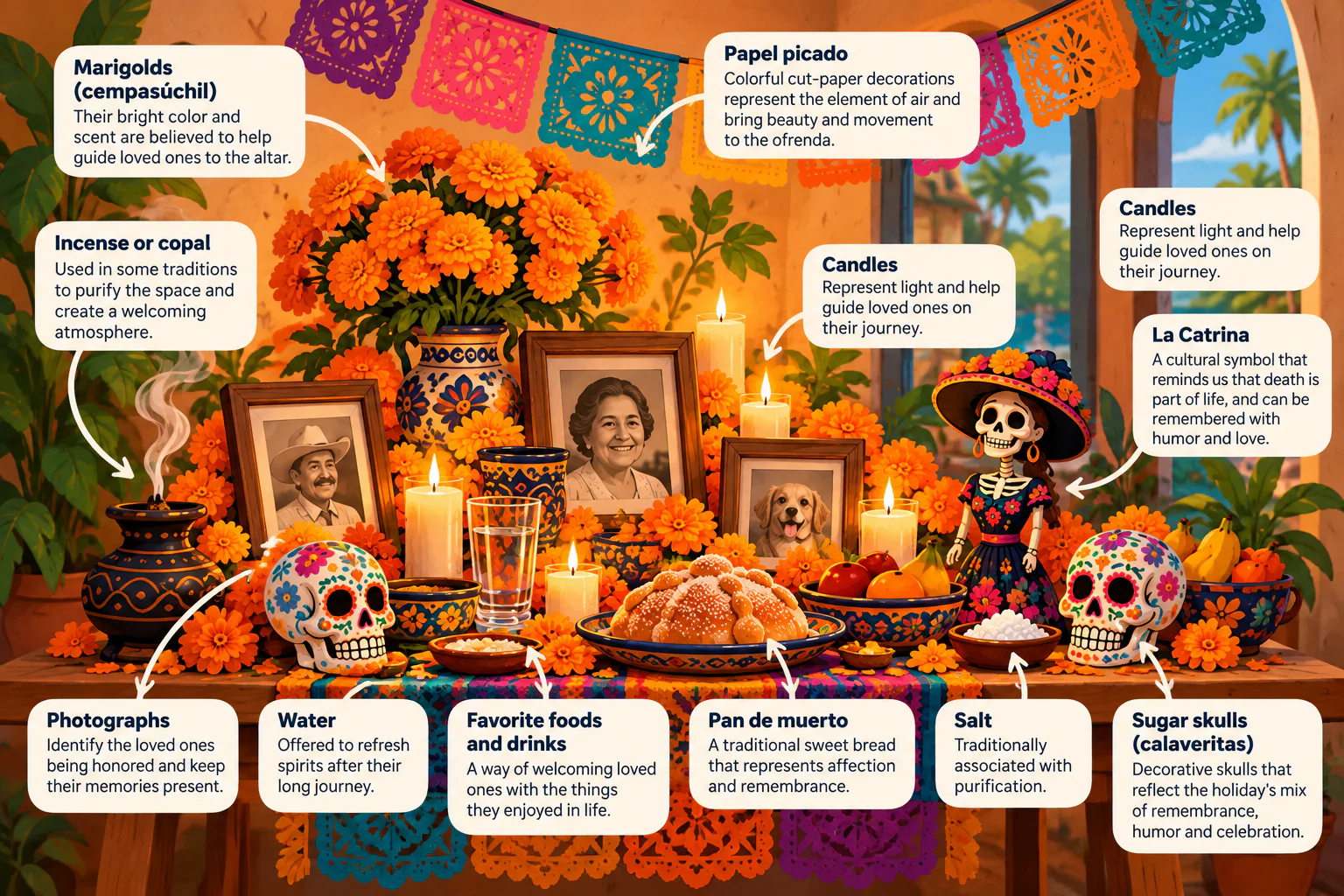
- Photographs
Identify the loved ones being honored and keep their memories present.
- Marigolds (cempasúchil)
Their brilliant color and distinctive scent are traditionally believed to help guide spirits to the altar.
- Candles
Represent light and help guide loved ones on their journey.
- Water
Offered to refresh spirits after their long journey.
- Favorite foods and drinks
A way of welcoming loved ones with the things they enjoyed in life.
- Pan de muerto
A traditional sweet bread associated with the holiday, offered with affection and remembrance.
- Papel picado
Colorful cut-paper decorations that bring movement and beauty to the altar, often associated with the element of air.
- Sugar skulls (calaveritas)
Decorative skulls reflecting the holiday's mix of seriousness, humor and celebration.
- Salt
Traditionally associated with purification.
- Copal or incense
Used in some traditions to purify the space and create a welcoming atmosphere.
- Personal belongings
A favorite book, hat, piece of jewelry or toy makes the tribute personal.
Not every ofrenda includes every item. Regional customs, religious beliefs and family traditions shape how each altar is prepared.
How to Make Your Own Día de Muertos Ofrenda
You don't have to be Mexican to respectfully take part in the spirit of remembrance. If you've lost someone you love, creating a small ofrenda can be a beautiful way to honor their memory. There's no single correct way to do it.
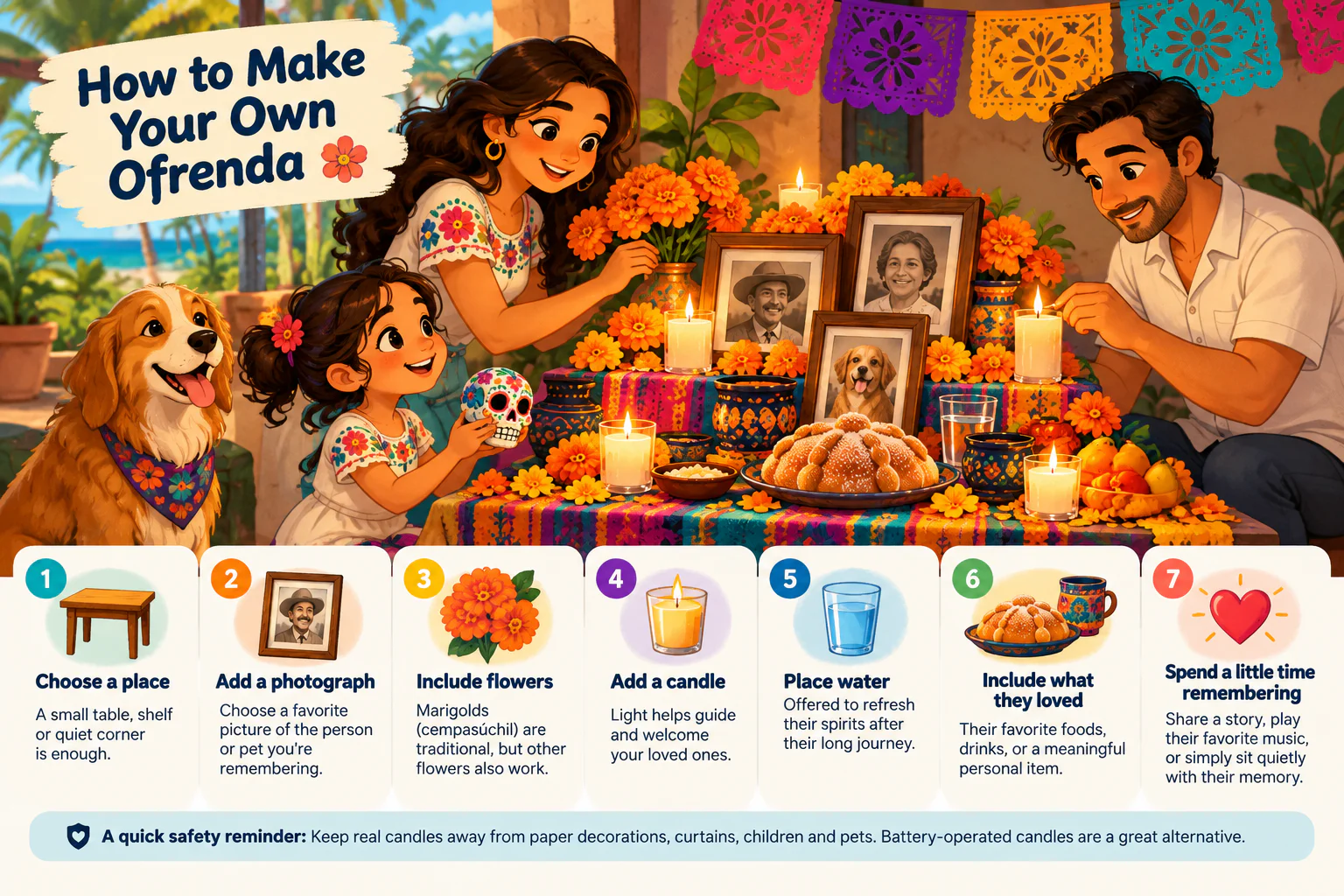
- 1. Choose a special place
- A small table, shelf or quiet corner of your home is enough.
- 2. Add a photograph
- Choose a favorite picture of the person or pet you're remembering.
- 3. Include flowers
- Marigolds are traditional, but other flowers can also make the space meaningful.
- 4. Add a candle
- Light is an important symbol in the tradition. A safe LED candle works too.
- 5. Place a glass of water
- Water is one of the most common traditional offerings.
- 6. Include something they loved
- Perhaps their favorite snack, drink, book, toy or a small personal item.
- 7. Spend a little time remembering
- Share a story, play their favorite music or simply sit quietly with their memory.
A small safety reminder
There's no need to make it perfect: the meaning comes from the love behind it. Just keep real candles away from paper decorations, curtains, children and pets. Battery-operated candles are a practical alternative.
Can You Make an Ofrenda for a Pet?
Absolutely. Many families now include departed pets in their Día de Muertos observances, sometimes with a separate offering on October 27.
A pet ofrenda might include a photograph, collar, favorite toy, a little food, water and flowers. It's a simple but moving way to acknowledge that animals are part of the family, too.
Whether you observe October 27 or include your pet during the main celebration, the important part is remembering the companionship and happiness they brought into your life.
Coco: A Beautiful Introduction to Día de Muertos
If you've watched Disney and Pixar's Coco, you've already had a charming introduction to the heart of Día de Muertos.
The 2017 animated film follows Miguel, a young Mexican boy whose extraordinary adventure takes him into a colorful Land of the Dead, where he discovers the importance of family, memory and honoring those who came before him.
One of the film's most memorable ideas is that remembering someone keeps their connection to the living world alive. That theme reflects something very real about Día de Muertos: photographs, stories, music and family traditions help preserve the memory of loved ones across generations.
The film also features recognizable elements of the celebration, including ofrendas, marigolds, family photographs and gatherings to honor the dead. Pixar's filmmakers made several research trips to Mexico, and a cultural consultant group worked alongside the team to guide the story.
Of course, the spectacular Land of the Dead, its magical rules and the adventures of its characters are fictional. Coco isn't a documentary or a literal description of what every Mexican family believes happens after death.
But if you've never seen it, it's a wonderful movie to watch around Día de Muertos. It's a cute, heartfelt homage to the holiday, and its message about remembering the people we love captures something truly beautiful about the tradition.
And if the song "Remember Me" makes you tear up, you're probably not alone.
What Is Janal Pixán?
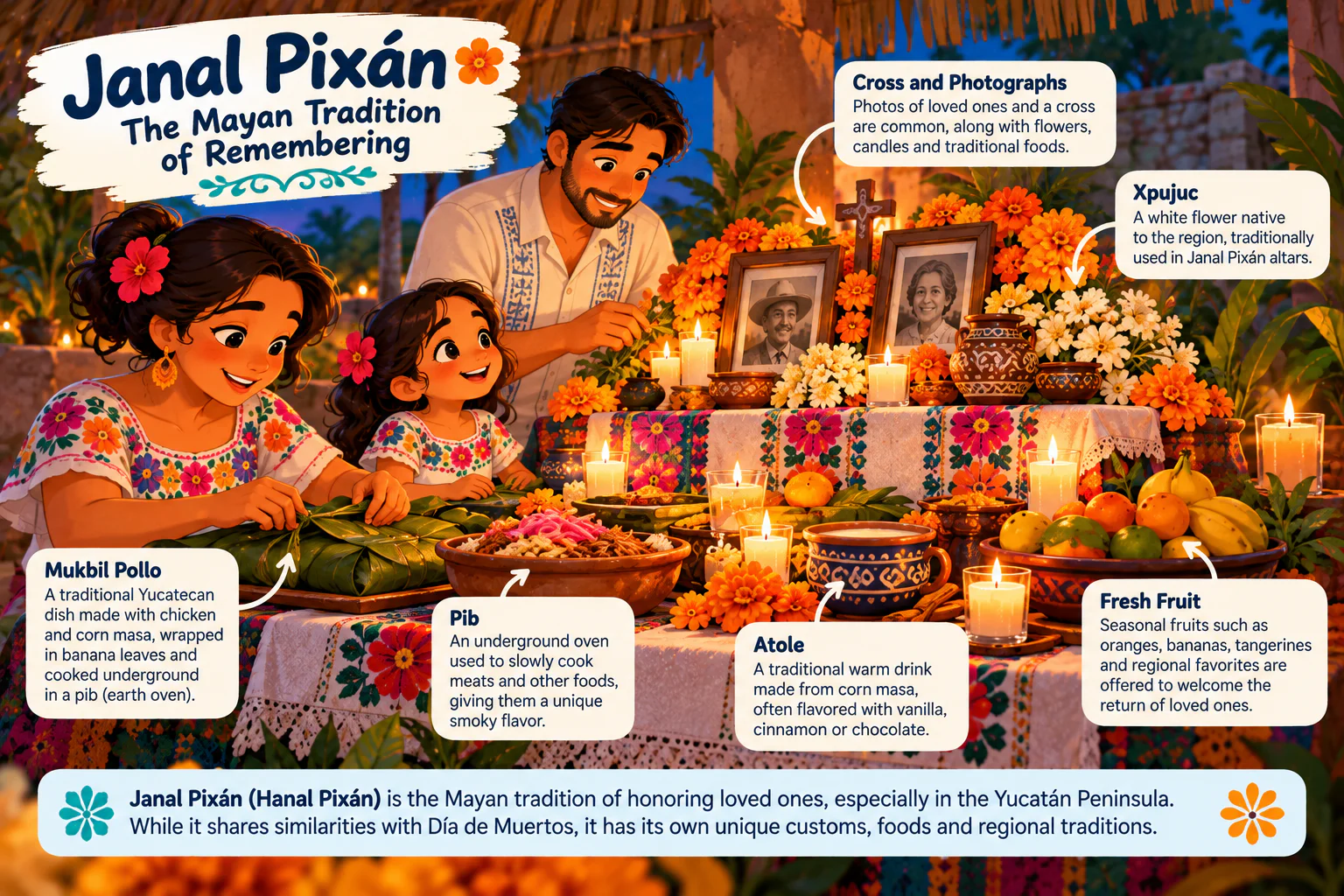
Here in the Yucatán Peninsula, Día de Muertos has an important regional connection to the Maya tradition called Janal Pixán, also commonly written Hanal Pixán. The name is generally translated as food of the souls.
This tradition honors deceased family members through special foods, offerings, prayers and gatherings. According to the Yucatán state government's cultural information, the principal days are:
October 31: remembrance of deceased children. November 1: remembrance of deceased adults. November 2: remembrance of all the souls of the departed, often marked by a Mass for the souls.
Notice the difference: in this regional tradition, children are commonly remembered on October 31 and adults on November 1. That's one reason it's important not to assume all of Mexico follows exactly the same calendar.
What makes Janal Pixán special? Food is central to the tradition. Families prepare offerings that may include atole, tamales, fruits, sweets and regional dishes.
One particularly important food is mukbil pollo, a large, tamal-like dish made with corn masa and seasoned filling, traditionally wrapped in banana leaves and cooked underground. It's also commonly called pib or pibipollo. The word pib also refers to the traditional underground earth oven used to cook it. So depending on the context, you may hear pib used for both the dish and the cooking method.
Family altars may include photographs, candles, embroidered cloths, flowers and foods associated with the people being remembered.
Janal Pixán reflects both Maya cultural traditions and centuries of interaction with Catholic observances. It's a living tradition, not simply a historical ceremony.
How Is Día de Muertos Celebrated in Playa del Carmen?
Living in Playa del Carmen gives you opportunities to experience both broader Mexican Día de Muertos traditions and the Maya cultural heritage of the region.
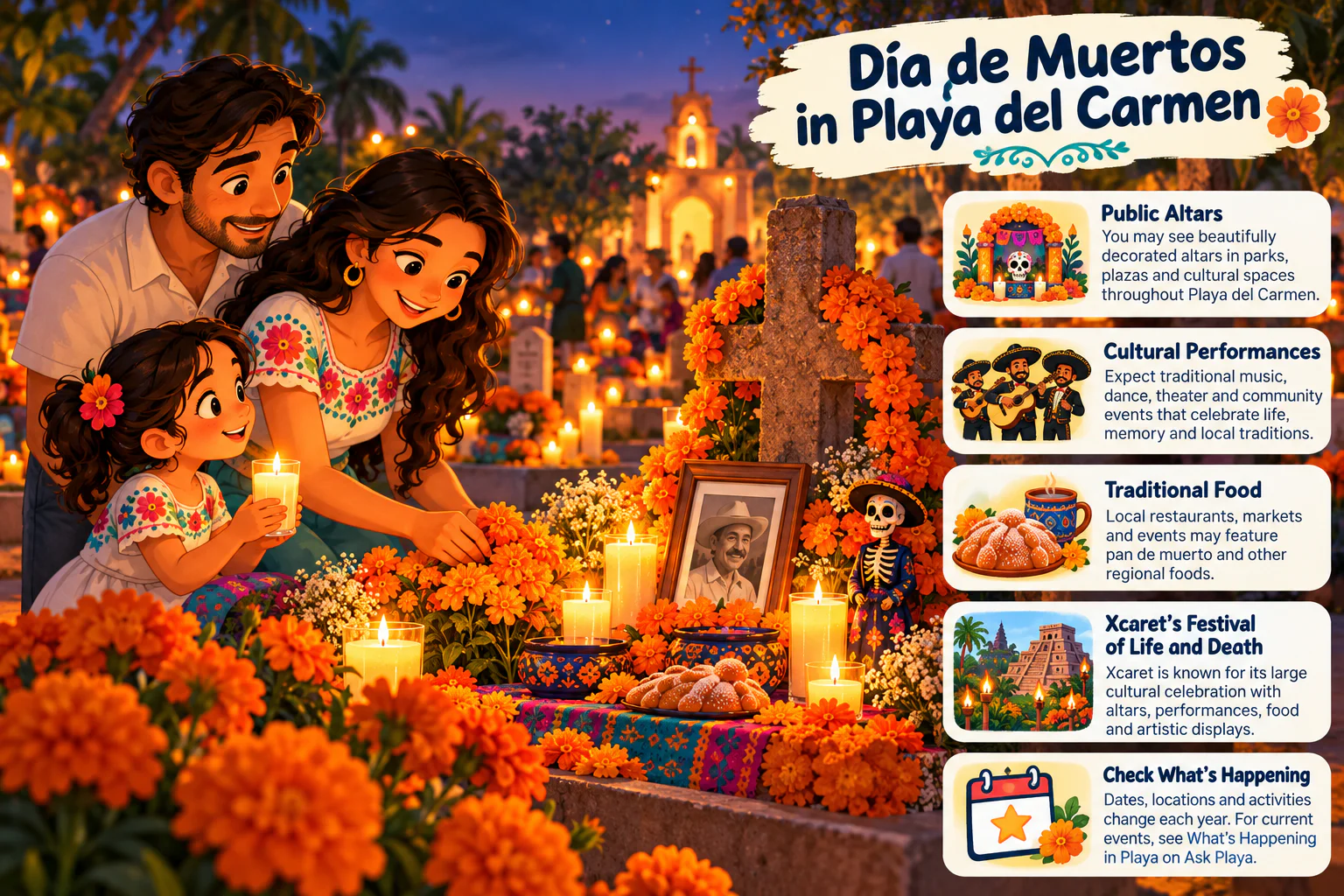
Depending on the year's program, celebrations may include public altars, cultural performances, traditional food, music, artistic displays and community remembrance activities.
Playa del Carmen's municipal government has organized Janal Pixán celebrations in previous years, and Xcaret's Festival de Vida y Muerte (Festival of Life and Death Traditions) is known for its cultural performances, food, altars and artistic presentations.
Exact locations, schedules, admission requirements and activities change each year. For current celebrations, check What's Happening in Playa on Ask Playa and the official organizers' announcements.
Can Foreigners Participate in Día de Muertos?
Yes. Visitors and foreign residents can respectfully appreciate and participate in Día de Muertos. You might attend a public celebration, admire an ofrenda, learn about Janal Pixán, try traditional foods or create a small remembrance space in your own home.
A few thoughtful guidelines help:
- Remember that the holiday has deep personal, cultural and sometimes religious significance.
- Ask before photographing private altars, families or cemetery ceremonies.
- Don't touch or rearrange offerings without permission.
- Follow local rules at cemeteries and cultural events.
- Recognize that traditions differ between families and communities.
Ask Playa Tip
You don't need to imitate every custom to appreciate the holiday. Sometimes listening, learning and showing respect are the most meaningful ways to participate.
A Celebration of Love That Continues
Perhaps the most beautiful thing about Día de Muertos is the way it brings remembrance into everyday family life.
A favorite meal. A familiar song. A photograph on a table. The scent of flowers. A story told once more. These small things help keep the memory of someone alive.
For people new to Mexico, the colorful skulls and decorations might be the first things they notice. But the deeper meaning is much more personal.
Día de Muertos reminds us that remembering those we love can be joyful as well as bittersweet, and that the people and animals who shaped our lives continue to have a place in our hearts. That's something anyone, anywhere, can understand.
Useful Spanish: Día de Muertos
Tap the speaker next to a phrase to hear it.
- Día de MuertosDEE-ah deh MWEHR-tohsDay of the Dead
- ofrendaoh-FREHN-dahoffering / memorial display
- cempasúchilsehm-pah-SOO-cheelmarigold
- Recordamos a nuestros seres queridos.reh-kohr-DAH-mohs ah NWEHS-trohs SEH-rehs keh-REE-dohsWe remember our loved ones.
- Siempre te recordaremos.SYEHM-preh teh reh-kohr-dah-REH-mohsWe will always remember you.
- Con mucho cariño.kohn MOO-choh kah-REE-nyohWith much love and affection.
Find it. Hear it. Show it. Explore more real-life phrases in Ask Playa's Useful Spanish feature, including Mexican Spanish pronunciation and full-screen phrase display.
 Frequently Asked Questions
When is Día de Muertos?
The principal days are November 1 and 2. Some Mexican traditions observe a longer period from October 27 to November 3, and in the Yucatán Peninsula's Janal Pixán tradition children are remembered on October 31 and adults on November 1. Dates vary by region, community and family.
Is Día de Muertos the same as Halloween?
No. Halloween is associated with costumes, spooky decorations and trick-or-treating. Día de Muertos centers on remembering and welcoming loved ones who have died, through family gatherings, offerings and altars called ofrendas.
Can I make an ofrenda if I'm not Mexican?
Yes. A small, respectful ofrenda with a photograph, flowers, a candle, a glass of water and something your loved one enjoyed is a meaningful way to remember them. There's no single correct way to make one.
Is October 27 really a day for pets?
Many people now remember beloved pets on October 27, and it has become a widely shared date in contemporary celebrations. It isn't observed universally; you can also include a pet during the main Día de Muertos celebration.
Is Coco an accurate picture of Día de Muertos?
Coco's Land of the Dead and its rules are fictional, but the film features real elements of the celebration, such as ofrendas, marigolds and family photographs, and its theme of remembering loved ones reflects the heart of the tradition.
What is Janal Pixán?
Janal Pixán, also written Hanal Pixán, is the Maya tradition of the Yucatán Peninsula whose name is generally translated as food of the souls. Families honor deceased loved ones with special foods such as mukbil pollo (also called pib), offerings, prayers and altars.
Where can I find Día de Muertos celebrations in Playa del Carmen?
Programs change each year. Check Ask Playa's What's Happening section for current listings, along with the Playa del Carmen municipal government and official event organizers.
 Sources
- UNESCO: Indigenous Festivity Dedicated to the Dead (meaning of the festivity and its 2008 inscription)
- INPI, Instituto Nacional de los Pueblos Indígenas: the meaning of the elements of a Día de Muertos ofrenda
- Government of Yucatán: Janal Pixán (meaning, the days for children and adults, mucbipollo or pib)
- Mérida City Government: Janal Pixán traditions and altar offerings
- Vice en Español: Hanal Pixán in Yucatán (pib as the earth oven and the local name for the dish)
- Azteca Jalisco: the popular Día de Muertos calendar from October 27 to November 2 (notes that dates vary by community and family)
- Pixar: Coco (official film page)
- Motion Picture Association: Pixar's research trips to Mexico and cultural consultant group for Coco (2017)
- Playa del Carmen Municipal Government (official event announcements)
- Xcaret: Festival de Vida y Muerte (official festival page)
Was This Helpful?